


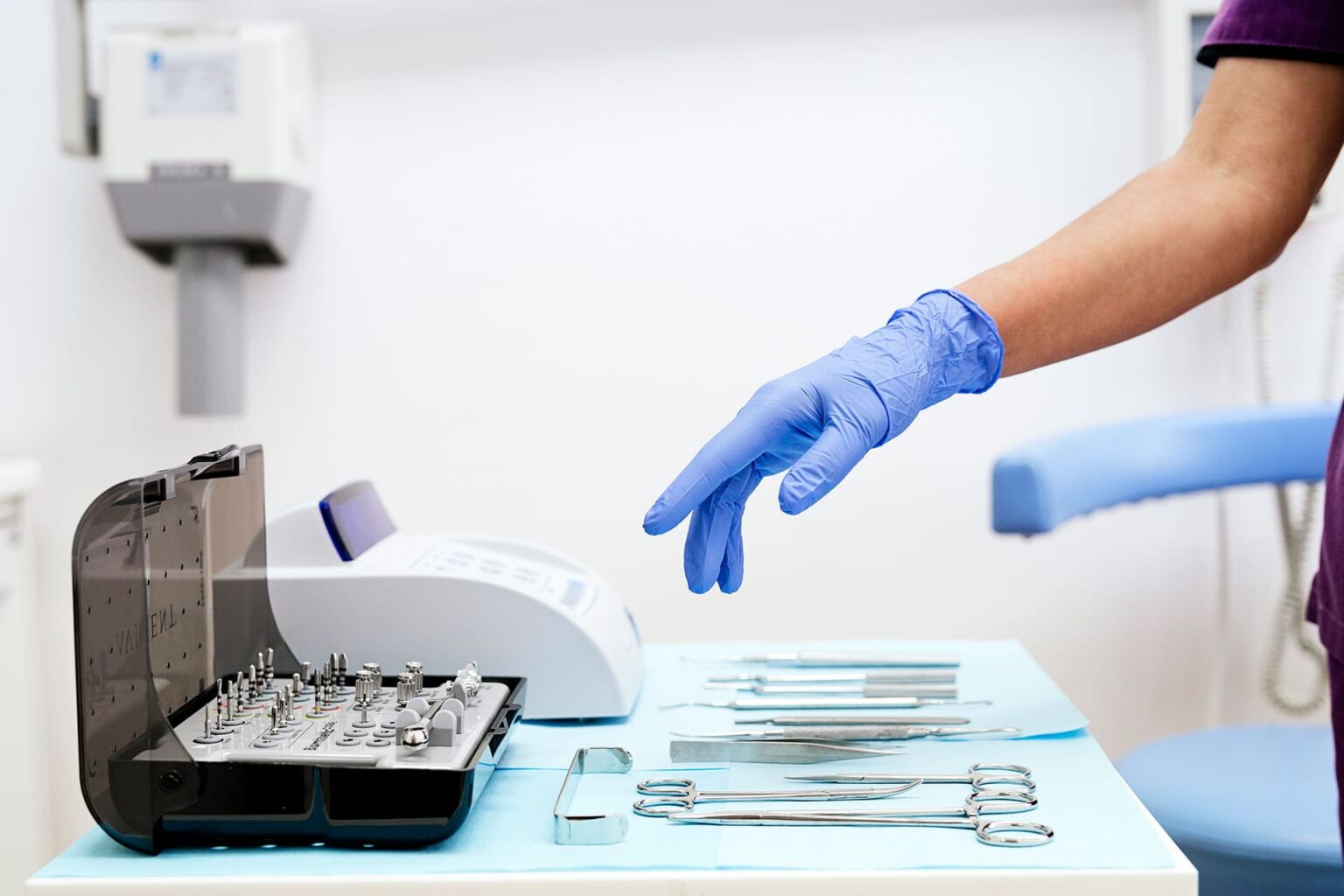
Many patients face problems that general dentistry cannot resolve. Extraction of an erupted or impacted wisdom tooth, inflammation of a tooth root, bone loss or replacing a missing tooth with implants requires more advanced and specialized solutions. In such cases, oral surgery is required. In our practice, these procedures are performed by Dr Arnautović, oral surgery specialist.
What is the goal of oral surgery?
The main goal of oral surgery is to remove the source of infection, treat severe damage to the teeth and jaw, and prepare tissues for prosthetic rehabilitation.
Our approach to oral surgery
We always plan treatment from the end result backwards, meaning that the desired outcome guides all our decisions and procedures. All procedures are performed using minimally invasive methods, in which dental loupes help us greatly. The use of loupes means that we work with greater precision and thoroughness, resulting in better and faster recovery after every procedure.
Oral surgery procedures
Alveotomy
A procedure in which a tooth or retained root is surgically removed. Most often this involves impacted wisdom teeth, although any tooth may be involved.
A recommendation for alveotomy is made by an oral surgery specialist or by an orthodontist for patients who require orthodontic treatment.
It is recommended that impacted wisdom teeth be removed at a younger age, up to the age of 25, because the procedure is generally easier to perform and recovery is easier and faster, although the procedure can be carried out at any age.
Apicoectomy
A procedure in which the tip of the tooth root and inflamed tissue are surgically removed, enabling proper healing of the surrounding bone and long-term preservation of the tooth.
It is used in cases where the infection cannot be eliminated by conventional root canal treatment (endodontics).
Corticotomy
The indication and prerequisites for this procedure are determined by a specialist in orthodontics. Most often it involves impacted upper canines, although other teeth may also be involved.
In agreement with the orthodontic specialist, the elements required to bring the tooth into position can be placed during surgery – a bracket with a chain.
Cystectomy
Cysts are lesions that develop in the jaw and are most often associated with bacterial infection of a tooth. As they grow, they damage the bone, can lead to tooth loss, and may cause very unpleasant inflammatory conditions.
They very rarely regress after removal of the cause of infection and need to be surgically removed.