


The absence of one or more teeth is an aesthetic problem and, even more importantly, a health problem. The loss of just one tooth can lead to serious functional disruption – consequences include tilting/migration of neighboring teeth and eruption of the opposing tooth.
At the Arnautović practice, we solve such problems with a personalized treatment plan. Through dental prosthetic restorations, we restore teeth that are damaged and, therefore, impair chewing and speech function. These are most often previously treated or cracked teeth that, in addition to impaired function, also lack appropriate aesthetics.
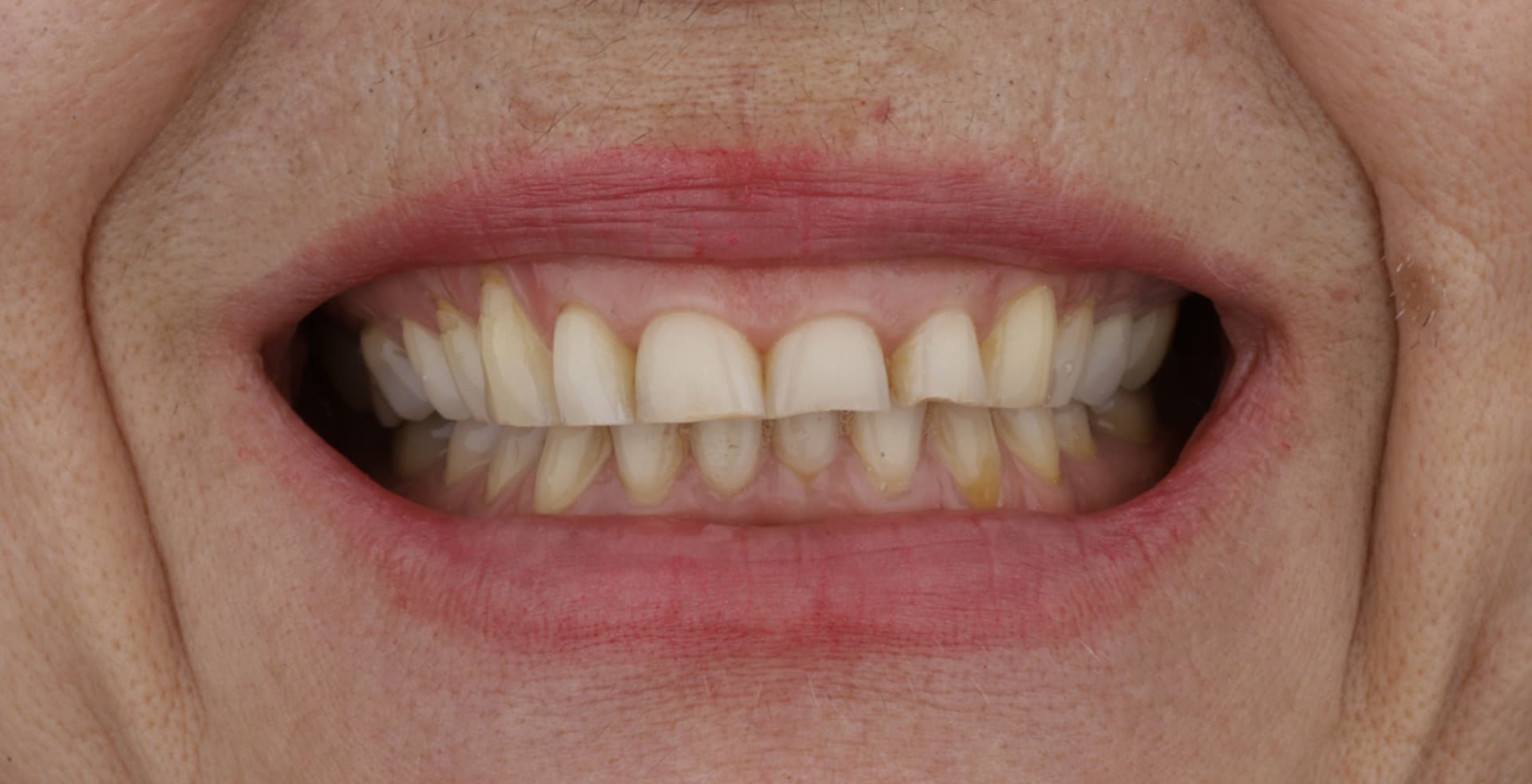
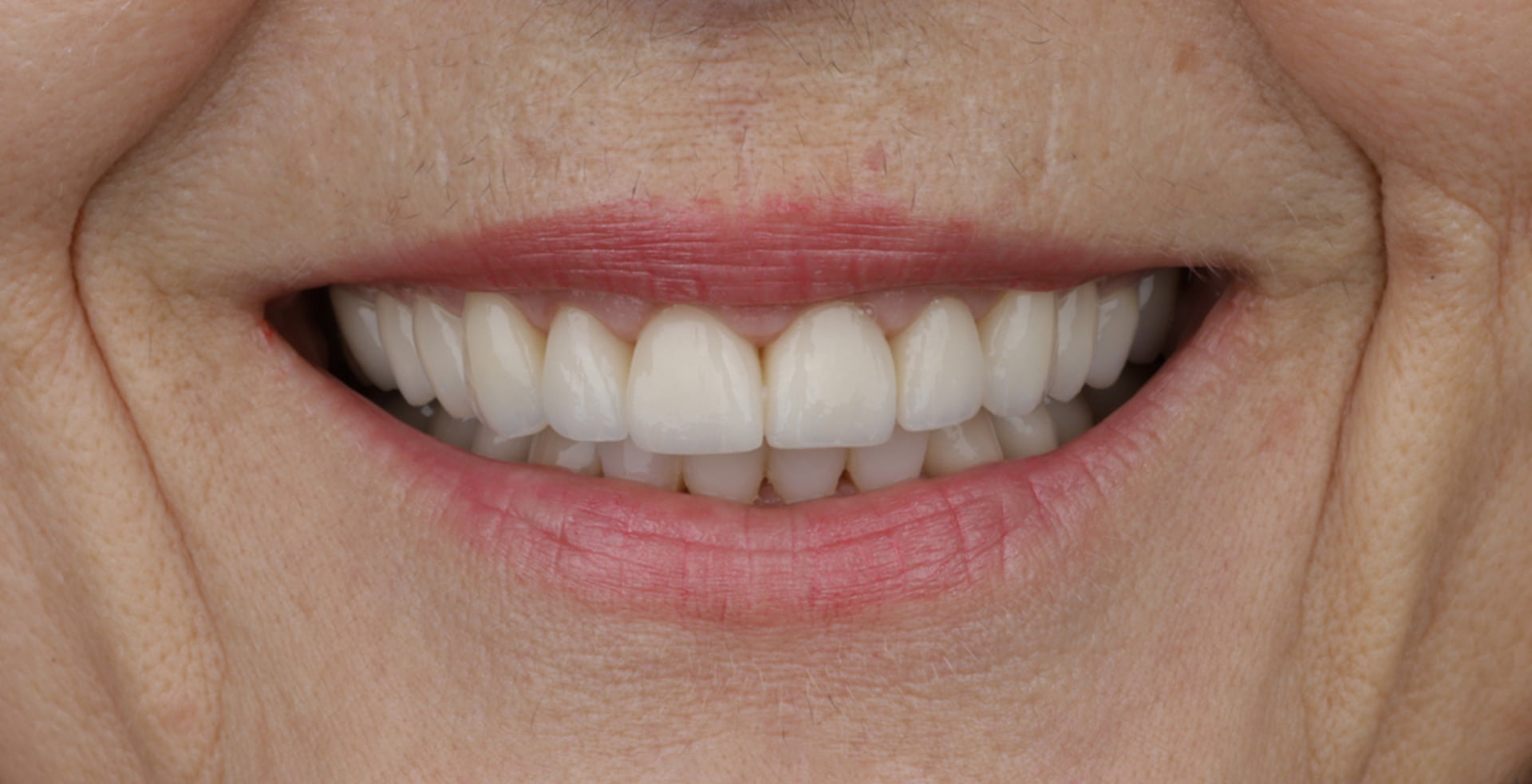
Our approach to dental prosthetics
We begin prosthetic rehabilitation by creating a personalized treatment plan. In doing so, we use Digital Smile Design, a tool that enables the patient to see the final appearance of their teeth before treatment begins. Computer-designed 3D models of the new teeth are quickly and easily transferred directly into the patient’s mouth.
The different needs of our patients require different prosthetic solutions, such as veneers, crowns or bridges. For each patient, we individually select the type, material, shape, and color of the prosthetic restoration.
All procedures are performed using minimally invasive methods, in which loupes help us greatly. The use of loupes means that we work with greater precision and thoroughness, and this is reflected in the results and in our patients’ beautiful smiles.
Crowns and bridges
When teeth are damaged by caries or trauma, they need to be protected with crowns or bridges. In addition to protecting damaged teeth, these solutions provide teeth with a beautiful and healthy appearance.
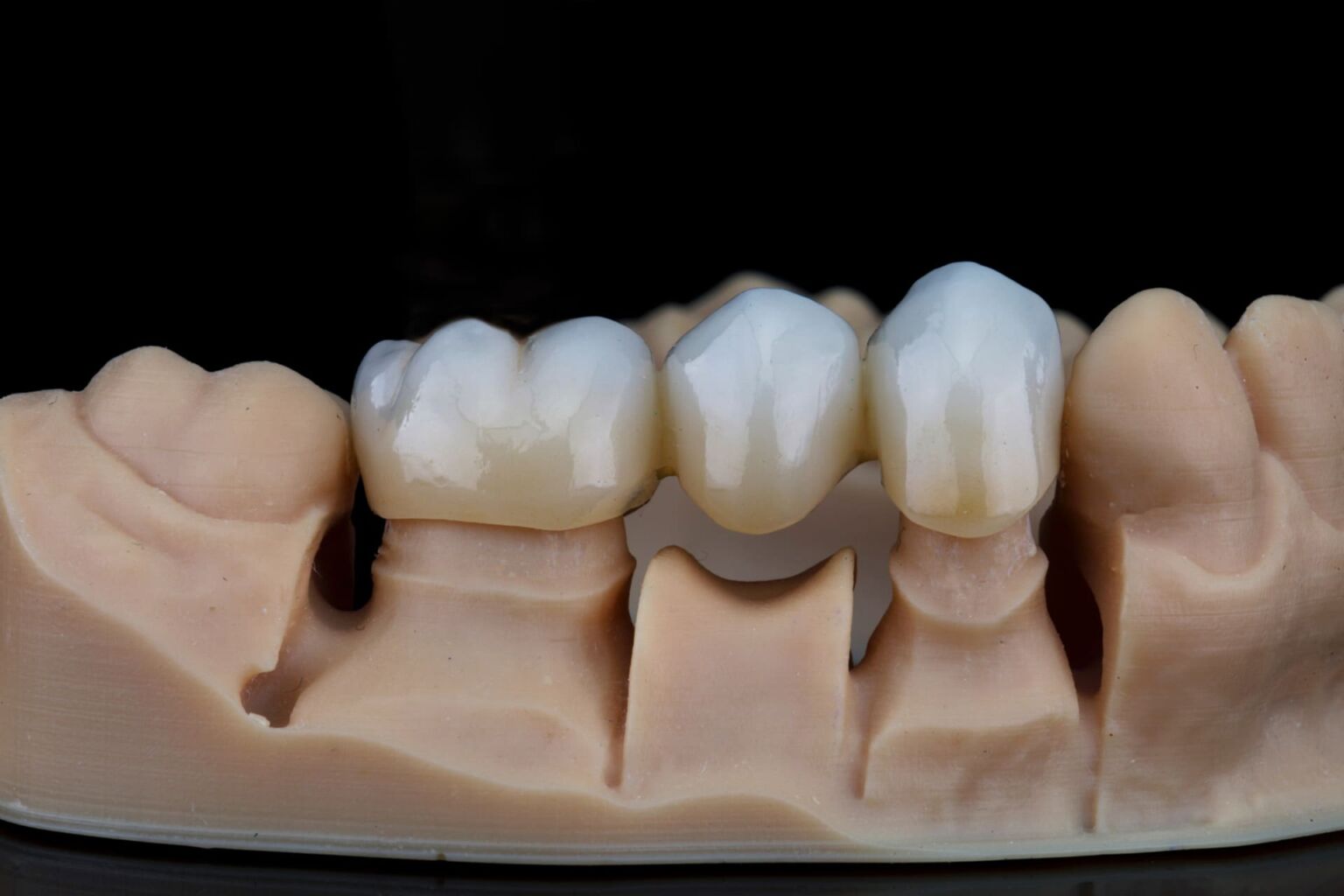
We distinguish between single crowns and bridges. Single crowns replace only one tooth and are not connected to neighboring teeth, while a bridge consists of a series of two or more crowns connected to one another. A bridge can also replace a missing tooth by crowning the adjacent teeth.
Crowns are used in the final stage of replacing teeth with implants. A crown is placed on the inserted titanium or zirconia implant.
Crowns and bridges can be made from different materials. The most commonly used materials for making crowns and bridges are porcelain-fused-to-metal, zirconia-ceramic and glass-ceramic. Porcelain-fused-to-metal crowns were the gold standard in dentistry for many years. They have a strong framework and look good because the metal substructure is completely covered with ceramic.
In zirconia-ceramic crowns, the metal base is replaced by an equally strong zirconia base. Aesthetically, zirconia-ceramic closely mimics the natural color of the tooth and is therefore increasingly chosen by patients for whom smile aesthetics are important.
Glass-ceramic crowns can fully imitate tooth color and enamel translucency, making them an ideal choice for the reconstruction of front teeth.
If you are not sure whether you need a prosthetic restoration or an implant, be sure to consult us, and find out more about this topic in the article: Do you need to replace one or more teeth? Learn the difference between an implant and a dental bridge.
Veneers
Veneers are a treatment option for people who are not satisfied with the aesthetics of their smile. They allow us to correct the color, shape, and minor irregularities in the position of the teeth.
To make a veneer, the tooth enamel must be slightly reduced on the surface. This achieves the desired aesthetic improvement in a minimally invasive way.
Veneers are most often made of glass-ceramic, which provides a long-lasting result because the material does not change in appearance or structure. Veneers made in this way remain the same as on the first day even after ten or more years.