


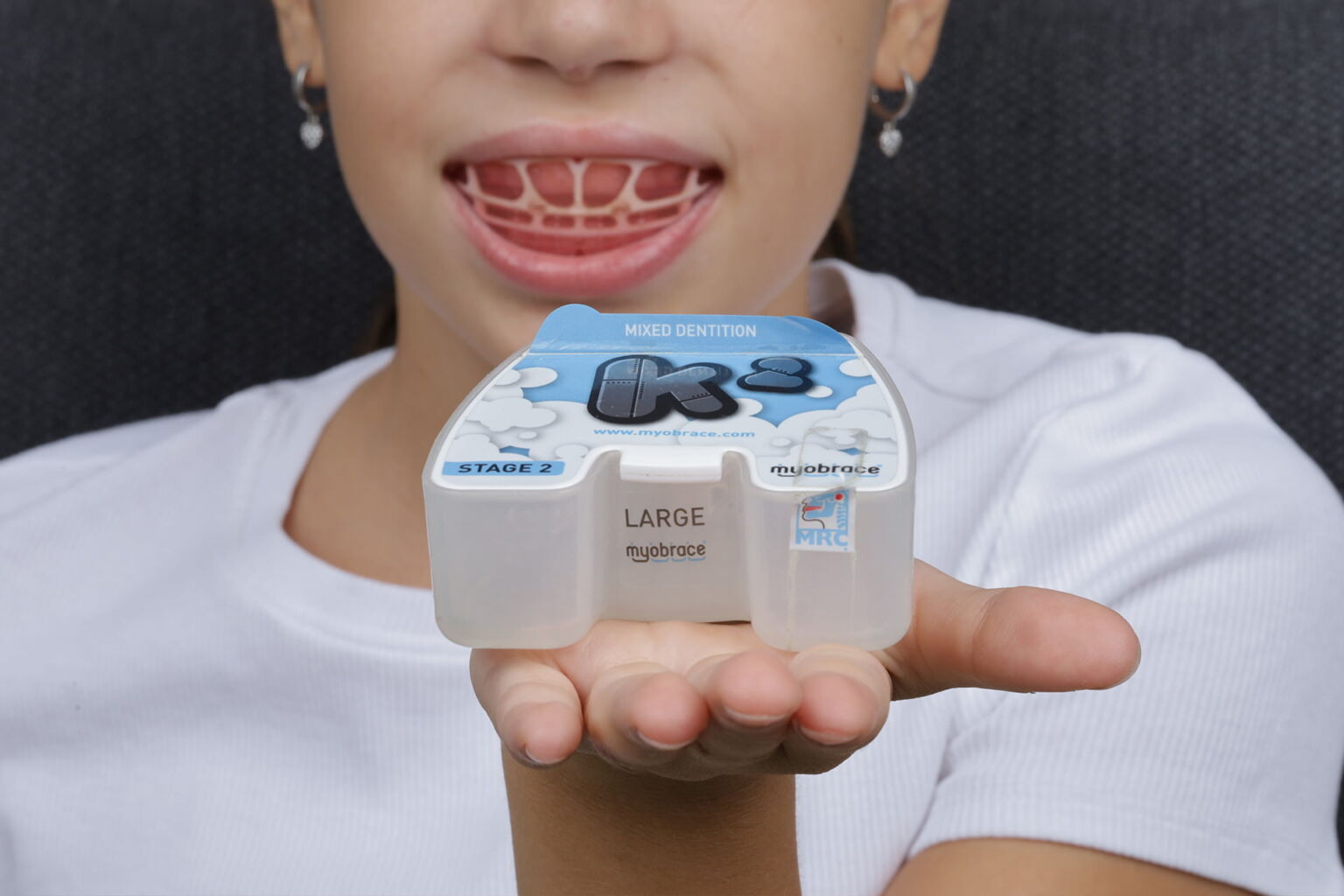
Myofunctional therapy — Myobrace appliance
Modern research shows that crooked teeth and poorly developed jaws are not caused only by genetics, but also by mouth breathing, poor tongue posture, and improper swallowing. Myofunctional therapy helps guide the natural development of the jaw and the position of the teeth without traditional braces. This holistic method uses the Myobrace appliance, which is worn for 1–2 hours during the day and then throughout the night. Although this technique is still developing, it is completely safe and has no known risks.
Myofunctional therapy is more than just a dental treatment: it is neuromuscular re-education of the oral and facial muscles. While traditional orthodontics often focuses exclusively on moving teeth, myofunctional therapy addresses the underlying causes of crooked teeth and poor jaw development.
Our approach to myofunctional therapy
Before starting therapy, we must rule out any central breathing problem and any obstruction in the respiratory tract (find out more in the article Myobrace appliance — more than aesthetic teeth straightening for children). We will then determine the cause of the dysfunction. This may be mouth breathing, incorrect tongue posture or reverse swallowing.
Only then does the treatment protocol begin, following a series of structured steps:
- habit correction
- dental arch development
- tooth alignment
- retention
Our fundamental philosophy is that form follows function!
The key part of this therapy is the Myobrace appliance (Myobrace trainer). It eliminates the influence of the cheek, tongue, and lip muscles, thereby encouraging proper growth and development of the jaw. Myobrace helps correct problems such as crossbite, open bite, incorrect tooth position, poor relationship between the upper and lower jaw, and other orthodontic problems.
Who is a candidate for myofunctional therapy or Myobrace appliance therapy?
Myofunctional therapy is most often carried out in children, where early intervention is particularly important. However, it is also used successfully in the treatment of adolescents and adult patients.
When it comes to children, research shows that as many as 70% of children at the age of five may suffer from crooked teeth, a dysfunctional bite or jaw disharmony. It is, therefore, essential to include children aged 5–15 in therapy while they are still growing. By correcting habits early, we can influence facial and jaw growth, often reducing or eliminating the need for tooth extraction, fixed braces later in life, and orthognathic surgery as part of orthodontics in adulthood. We have written about this topic in detail in the article Myobrace appliance – more than aesthetic teeth straightening for children, so be sure to read that as well.
What are the goals of myofunctional therapy?
By addressing the underlying causes of poor tooth position, myofunctional therapy offers:
- straight teeth and improved facial aesthetics.
- better sleep quality and reduced snoring.
- improved posture and reduced discomfort in the jaw joint (temporomandibular joint).
- stable, long-term results without lifelong dependence on retainers.